| Quick Start | Tutorials | Download | Purchase | Support |
| Command List |  DAuthorize DAuthorize |
 DBuild DBuild |
 DBuy DBuy |
 DCheck DCheck |
 DColorize DColorize |
 DDelete DDelete |
 DDiagnose DDiagnose |
 DEdit DEdit |
 DEmbed DEmbed |
 DExtrude DExtrude |
 DHatch DHatch |
 DHelp DHelp |
 DMerge DMerge |
 DMesh DMesh |
 DOrder DOrder |
 DProject DProject |
 DRead DRead |
 DRemesh DRemesh |
 DRepair DRepair |
 DSeparate DSeparate |
 DUpdate DUpdate |
| Tutorial examples: | Example-0 | Example-1 | Example-2 | Example-3 | Example-4 | Example-5 |
DirectMesh is an intelligent Rhinoceros plugin for efficient mesh and finite element model generation. It enables you to easily create complex finite element models within the interactive environment of Rhinoceros. It supports mainstream finite element analysis software such as ABAQUS, ANSYS, FLAC3D, MIDAS, MULTIFRACS, and NASTRAN. Rhinoceros 7 or later is required to use this software. After running the installer, the DirectMesh plugin will load automatically when you run Rhinoceros.
Download: Click here to download DirectMesh
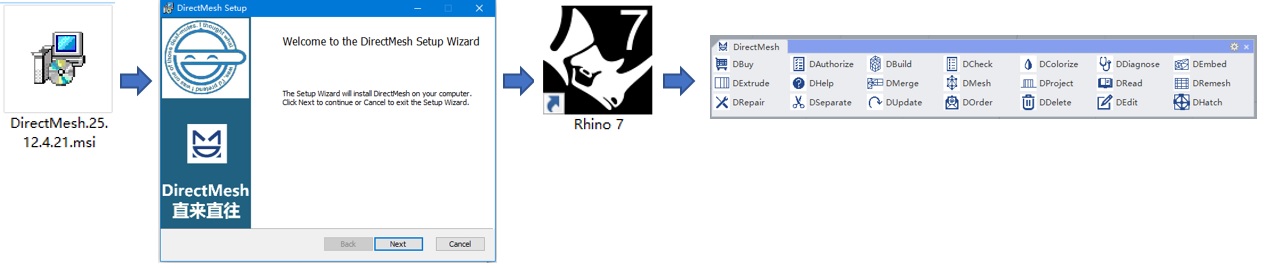
Before using DirectMesh, we first need to understand the following concepts: 1. Geometry, such as points, point clouds, curves, surfaces, and solids; 2. Mesh, which is a collection of triangular and quadrilateral faces. These faces are called mesh faces, their vertices are called nodes, and their edges are called mesh edges. Meshes are categorized into unstructured and structured, with structured meshes being more regular; 3. Finite element model, which is a collection of elements. The vertices of elements are called nodes. Elements are categorized into point elements (e.g., concentrated mass), line elements (e.g., beams and columns), surface elements (e.g., shells and membranes), and solid elements (e.g., tetrahedrons, pyramids, wedges, and hexahedrons).

The finite element modeling workflow with DirectMesh is: first create a preliminary mesh from geometry, then refine the mesh, and finally build the final finite element model using closed surface meshes representing solid elements, independent meshes representing surface elements, polylines representing lines, and points representing point elements. Details are as follows:
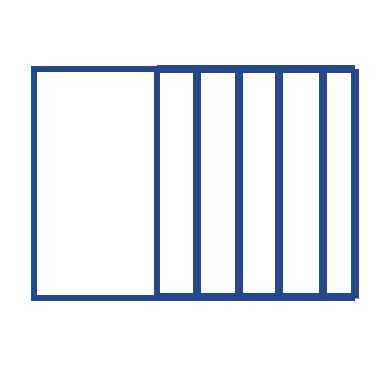
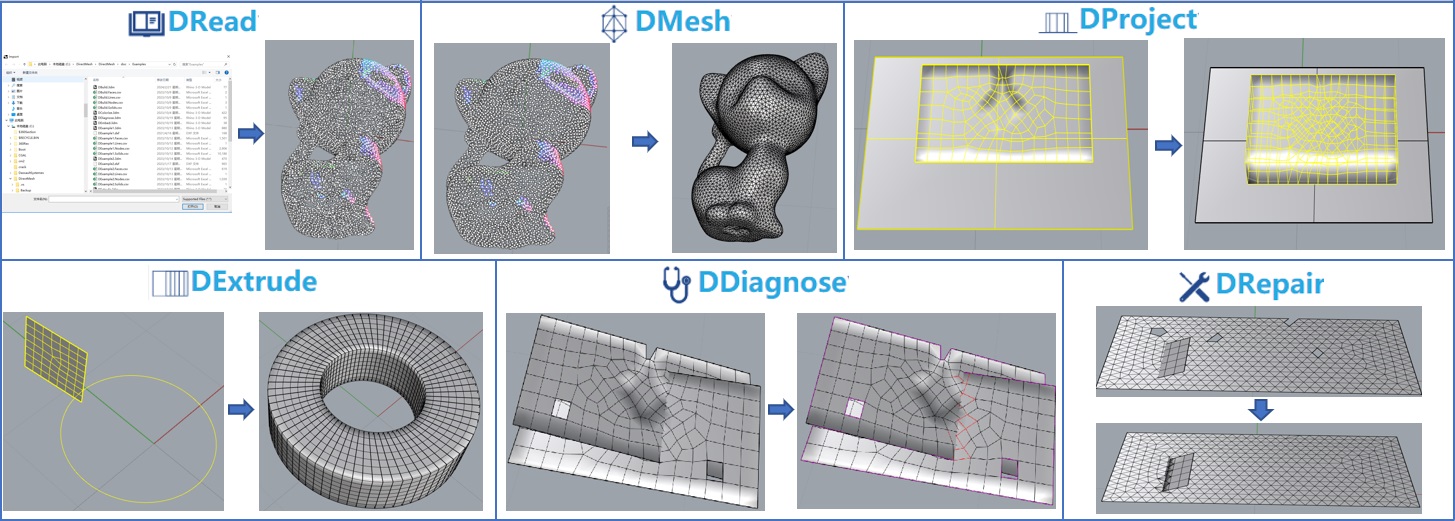
Step 1: Create preliminary mesh models from various geometric models. The DRead command can load various geometric models. The DMesh command can create preliminary mesh models from geometry (e.g., generating corresponding meshes from solids or point clouds). The DExtrude command can extrude a mesh along a curve to form a closed mesh (e.g., extruding a tunnel cross-section mesh along a tunnel axis to create a mesh model representing the tunnel). The DProject command can project a grid onto a surface and generate the corresponding closed mesh (e.g., projecting a mesh representing the soil surface onto a plane to generate the corresponding mesh model). The DDiagnose command can diagnose conflicting faces, holes, and collinear situations within a mesh. The DRepair command can automatically fix errors in the mesh (e.g., repairing conflicting faces, holes, cracks, protrusions, duplicate coincident or adjacent nodes, non-coplanar quadrilateral faces, etc. It can also merge two triangular faces sharing an edge and being co-planar into a quadrilateral face).
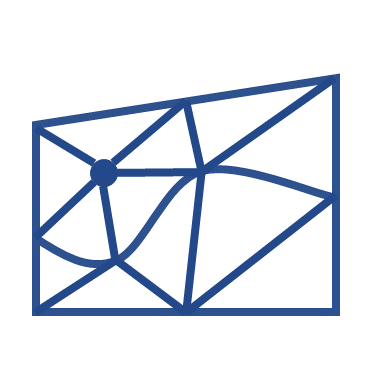
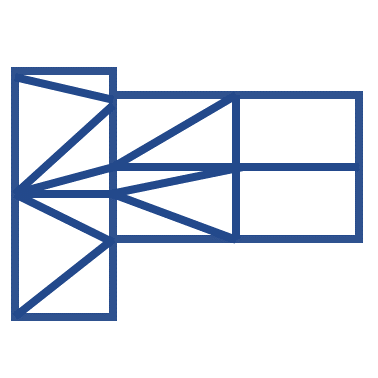
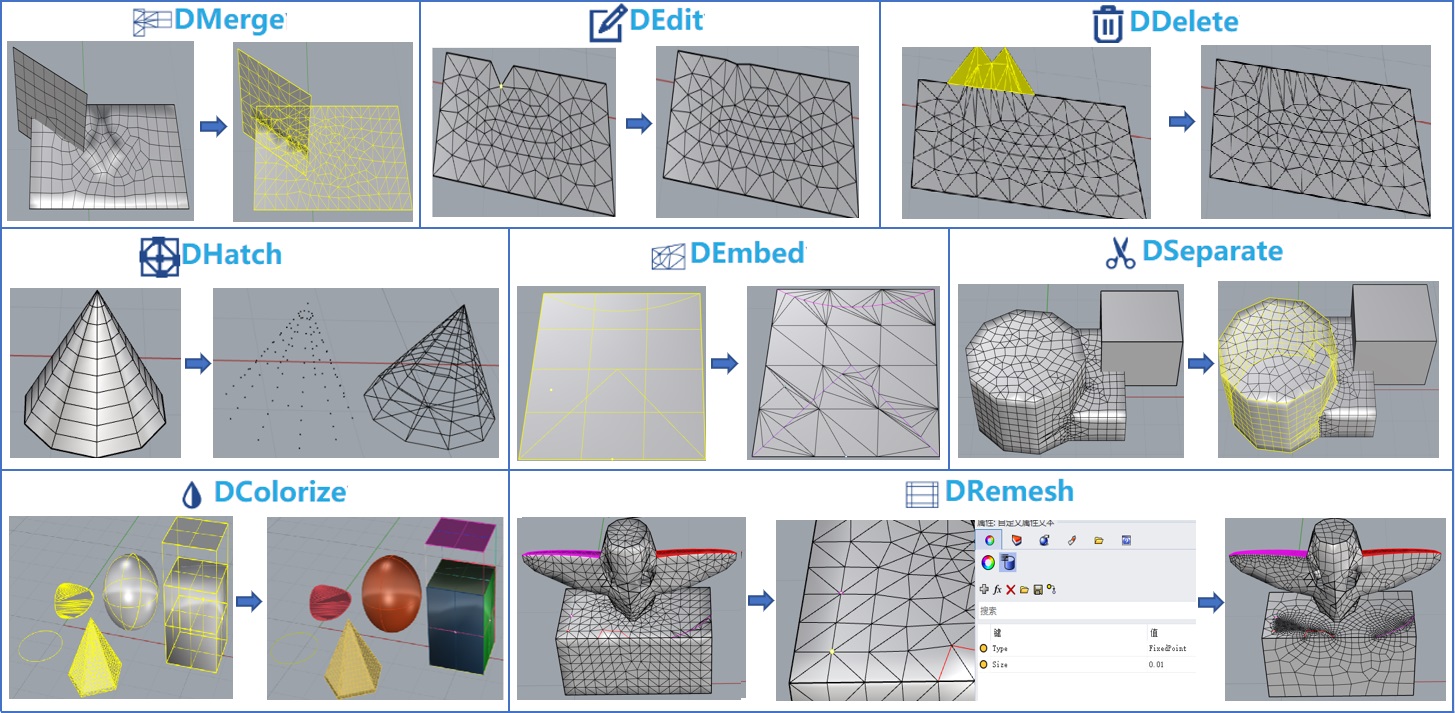
Step 2: Refine the mesh model. The DMerge command can perform node-sharing merging of multiple meshes and curves (meshes representing multiple structures that are embedded within each other will typically cause finite element analysis to fail if nodes are not shared; this command solves that problem). The DEdit command can edit the position of nodes within a mesh. The DDelete command can delete redundant mesh faces. The DHatch command can extract all nodes of a mesh to generate a point cloud, extract mesh edges as a skeleton, or generate the boundary edges of a mesh. The DEmbed command can embed polylines into a mesh with shared nodes (e.g., embedding polylines representing rails into a mesh representing the ground). The DSeparate command can segment a mesh based on fracture angles and other criteria (this function can partition the mesh, facilitating the addition of boundary conditions and loads in the final finite element model). The DColorize command can randomly color meshes and various collection models for easy distinction. Finally, the DRemesh command can perform high-quality remeshing (controlling global size and local size in specific regions, preserving fixed points, fixed edges, and fixed mesh faces, supporting both structured and unstructured meshes).
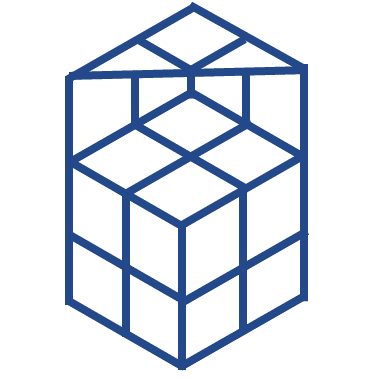
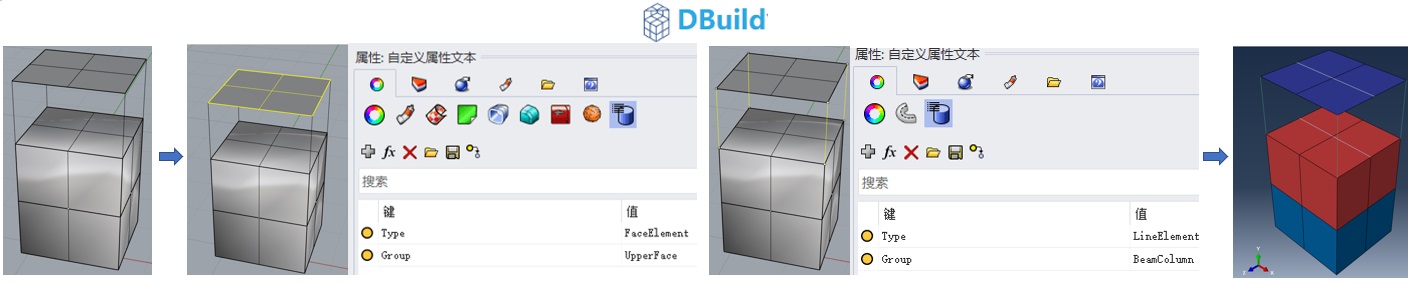
Step 3: Use the DBuild command to generate the final finite element model input file, which will also output the corresponding finite element model in Rhinoceros. It supports mainstream finite element analysis software such as ABAQUS, ANSYS, FLAC3D, MIDAS, MULTIFRACS, and NASTRAN. It supports solid, surface, line, and point elements. Closed meshes automatically generate corresponding solid elements. Adding a user-defined attribute Type=FaceElement to a mesh generates corresponding surface elements. Adding Type=LineElement to a polyline generates corresponding line elements. Adding Type=PointElement to a point generates corresponding point elements. The output finite element model retains all element group information. The corresponding model can then be loaded into commercial finite element software for analysis.
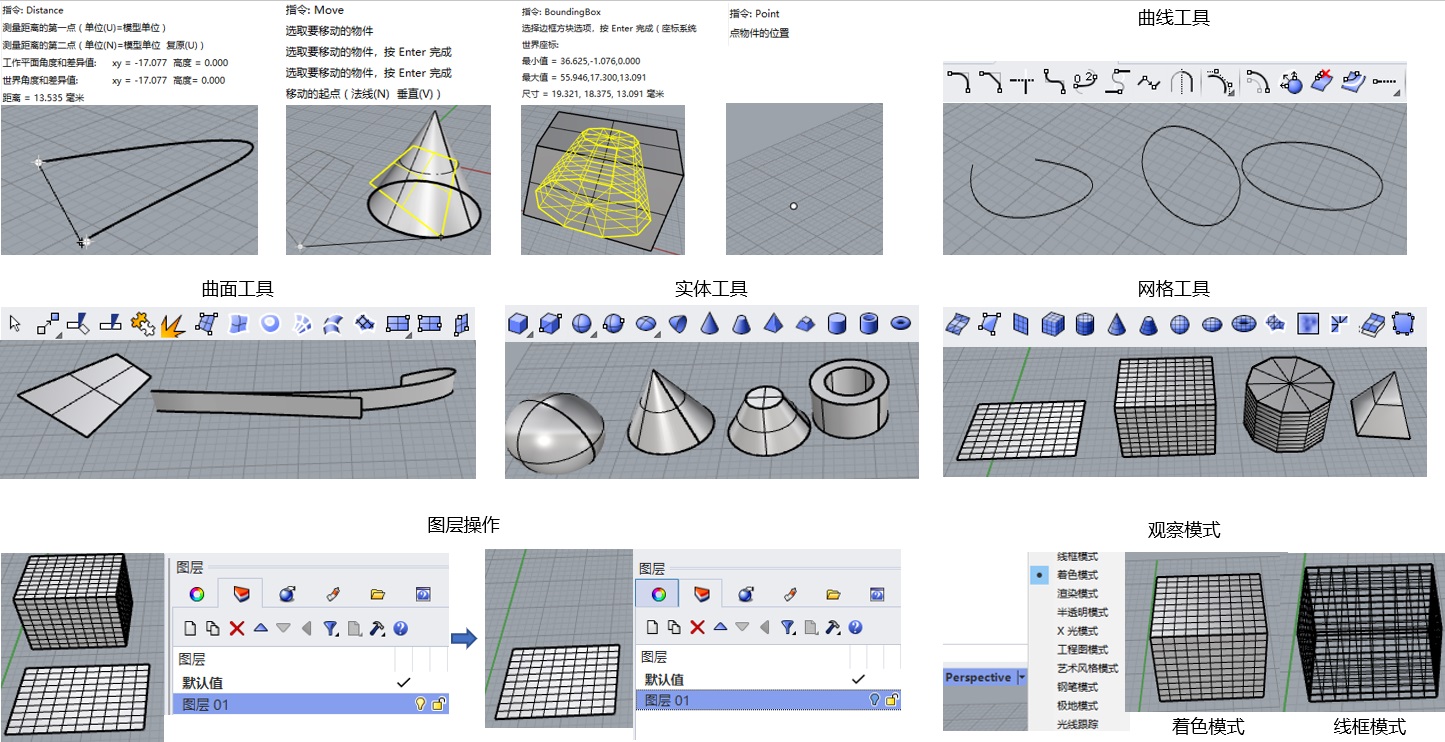
For more freedom and efficiency in modeling, you also need to master the basic usage of Rhinoceros appropriately. For example, the Distance command measures distance between two points, Move moves geometric objects, BoundingBox creates the tightest bounding box, Point creates specified points, curve tools create various curves, surface tools create various surfaces, solid tools create solids or perform Boolean operations, etc. Additionally, you need to learn Rhinoceros layer operations, such as show, hide, lock, unlock, etc. Changing the viewing mode (e.g., wireframe, shaded, rendered) can help you better inspect the model.
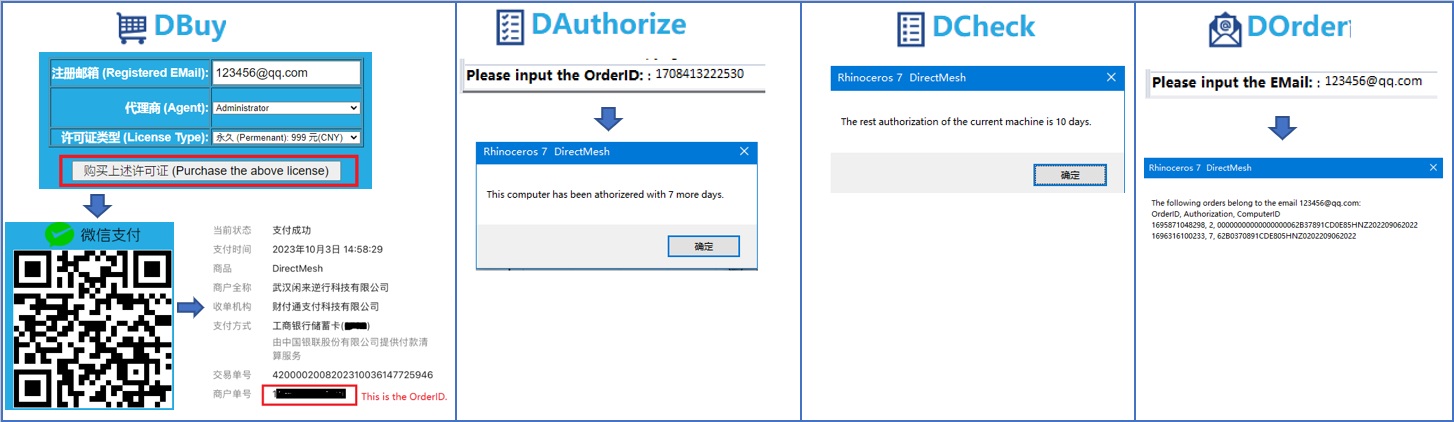
On first use, DirectMesh will automatically bind to the computer and can be used free for 14 days. After that, users must purchase a license via WeChat Pay to continue. You can use the DBuy command to purchase a license; the WeChat payment order number is the license. You can then use the DAuthorize command to bind the license to your computer. The DCheck command shows the remaining usage time on the current computer. The DOrder command views all licenses under the user's registered email.
License Purchase: Click here to purchase a DirectMesh license
For questions, please contact Dr. Xu, Phone: +86-15927279709, QQ: 2650616297, QQ Group: 745410771.